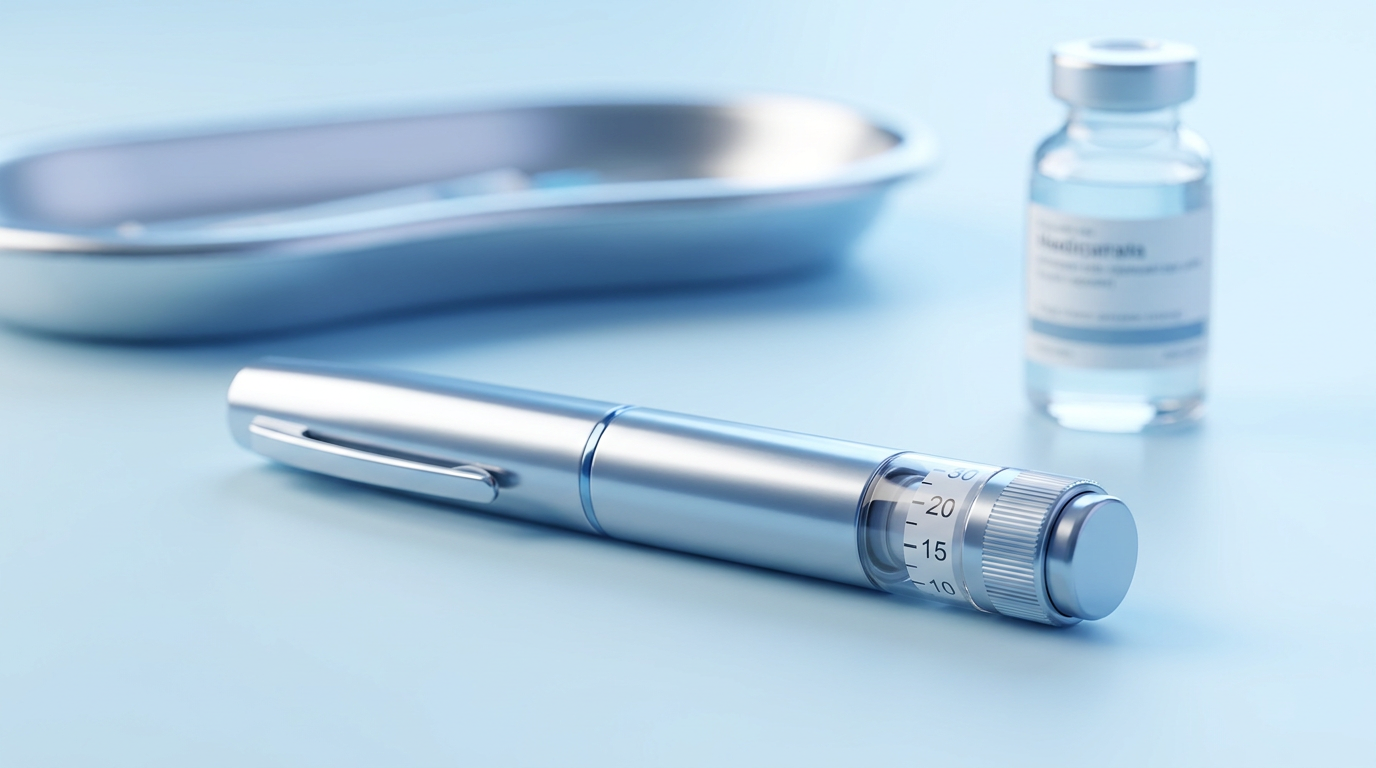

Nobody starts at the maximum. Every Ozempic prescription opens at 0.25 mg weekly, and whether it ever reaches the 2 mg ceiling depends on the indication being treated, the response along the way, and what else the patient is taking. The label treats 0.5 mg, 1 mg, and 2 mg as three legitimate maintenance dosages, not as one goal with two waypoints.
The indication decides the target before anything else
Ozempic carries three indications, and they do not share a dose target. For glycemic control in adults with type 2 diabetes, the maintenance dosage is selected on the basis of blood sugar response and may be 0.5 mg, 1 mg, or 2 mg once weekly. For reducing the risk of sustained eGFR decline, end-stage kidney disease, and cardiovascular death in adults with type 2 diabetes and chronic kidney disease, the labeled maintenance dosage is 1 mg once weekly, reached after at least four weeks at 0.5 mg. The cardiovascular indication covers adults with type 2 diabetes and established cardiovascular disease.
That distinction matters to anyone assuming a lower number means a lower standard of care. A patient on 1 mg for kidney outcomes is at the dose the label specifies for that purpose. The kidney outcomes trial that supports the indication and the earlier cardiovascular outcomes trial were not run to find a maximum tolerated dose, and pushing higher does not extend a result those studies did not test for.
What stops the conversation before it starts
A prescriber works through exclusions first. Ozempic is contraindicated in anyone with a personal or family history of medullary thyroid carcinoma and in patients with multiple endocrine neoplasia syndrome type 2, and it carries a boxed warning about thyroid C-cell tumors seen in rodents at clinically relevant exposures, where the relevance to humans has not been determined. A serious prior hypersensitivity reaction to semaglutide or any excipient is also a contraindication.
Beyond that, several histories change the plan rather than ending it. Severe gastroparesis is a situation where the label says use is not recommended. A history of pancreatitis, gallbladder disease, or diabetic retinopathy shapes both the monitoring plan and the appetite for the highest dose. Concurrent insulin or a sulfonylurea introduces a hypoglycemia risk that often requires reducing the other medication as semaglutide goes up, which is a separate prescribing decision most patients do not anticipate.
Why the ceiling is a limit rather than an aim
The trial comparing 2.0 mg with 1.0 mg in type 2 diabetes found the higher dose produced a further reduction in glycated hemoglobin, along with more gastrointestinal adverse events. That is the shape of the whole class. Effect rises with dose, then flattens, while symptoms keep accumulating. A regulatory maximum marks the point where regulators concluded the exchange stopped improving across a population.
Applied to one person, the practical question is whether the additional fraction of a percentage point is worth the symptoms that come with it for them specifically. For a patient still well short of a glycemic target with no side effects at 1 mg, the answer is often yes. For a patient close to target and already managing nausea, it is often no, and staying put is the better clinical decision rather than a compromise.
For a patient weighing that trade, having the dose ladder in front of them helps, and the route they choose determines how visible it is. Manufacturer pages from LillyDirect and NovoCare lay out the branded steps, while telehealth prescribers such as Ro, Henry Meds, and HealthRX publish their own Ozempic dosing references a patient can read before an appointment. None of that replaces the prescriber’s judgment about where to land, but it lets the conversation start from the same set of numbers.
| Clinical situation | What usually drives the dose decision |
|---|---|
| Type 2 diabetes, well short of glycemic target | Stepwise increases while symptoms permit |
| Type 2 diabetes with chronic kidney disease | Labeled maintenance of 1 mg once weekly |
| Concurrent insulin or sulfonylurea | Hypoglycemia risk, often a reduction in the other agent |
| Persistent nausea at the current step | Holding longer, or settling below the ceiling |
| History of retinopathy, pancreatitis, or gallbladder disease | Closer monitoring, more caution about the top dose |
| Weight management is the actual goal | A different labeled product, not a higher Ozempic dose |
When someone plateaus at the top
Reaching the maximum and stalling is a real clinical event with a structured response. The first move is confirming the drug is arriving as intended, since missed weeks, a pen stored outside labeled conditions, or an injection that was not fully delivered all present as an inadequate response. The second is looking at what else is in play, including medications that raise weight or blood sugar, untreated sleep apnea, alcohol, and whether the dietary and activity changes the label assumes as background are actually happening.
Only after that does the question become one of agents. Switching within the class, adding a drug with a different mechanism, or reassessing the target are all on the table, and current obesity pharmacotherapy guidance frames inadequate response as a trigger for reassessment rather than escalation past a labeled ceiling. Accepting the result achieved and defending it is also a defensible outcome. None of these are choices a patient makes alone, which is the whole point of the maximum being a limit.
What a proper assessment covers, and how routes differ
A real intake establishes the indication, screens the contraindications, reviews the medication list, sets a monitoring plan, and agrees on who is reachable when something goes wrong. Manufacturer channels such as NovoCare Pharmacy and LillyDirect assume an existing prescriber does that work. Subscription telehealth companies including Ro, Hims & Hers, LifeMD, and Sesame vary widely in how much of it happens before the first shipment, and with a cash-pay compounded service the published guidance on where a dose should land is worth reading next to what the site says about the provider behind it and what a monthly fee includes. Coverage under a Medicare Part D plan, where it applies, runs on the labeled indication rather than on a patient’s preference for a particular dose.
Compounded preparations do not import the label
Compounded semaglutide has not been through FDA approval, and no labeled dose sequence attaches to it. Concentrations are set pharmacy by pharmacy, so the milligram figures above describe the branded product and nothing else. Clinicians writing for their own colleagues have made the same argument, and the practical consequence is that the assessment work matters more, not less, when the product itself has no reviewed instructions behind it.
Frequently asked questions
Can a prescriber start above 0.25 mg to save time?
The labeling specifies initiation at 0.25 mg once weekly for four weeks, and the escalation sequence exists to reduce gastrointestinal adverse reactions. Skipping the opening step removes the adaptation period that makes the rest of the schedule tolerable, which tends to cost more time than it saves.
Is 1 mg a lower standard of treatment than 2 mg?
No. The label lists three maintenance dosages chosen on glycemic response, and 1 mg once weekly is the specified maintenance dosage for adults with type 2 diabetes and chronic kidney disease. The right dose is the one matching the indication and the response, not the largest one available.
What if weight loss is the actual goal?
Ozempic is indicated for type 2 diabetes and for cardiovascular and kidney risk reduction in that population. Semaglutide for weight management is a separate labeled product with its own maximum and its own escalation schedule, now covering both an injection and a tablet form.
Does a family history of thyroid cancer rule this out?
A personal or family history of medullary thyroid carcinoma is a contraindication, as is multiple endocrine neoplasia syndrome type 2. Other thyroid conditions are not automatically disqualifying, but the distinction is one a prescriber needs to make from an accurate family history rather than an assumption.
Should insulin be adjusted when semaglutide goes up?
Often, yes. The label warns that concurrent use with insulin or an insulin secretagogue raises the risk of hypoglycemia, including severe episodes, and notes that lowering the dose of the other agent may be necessary. That adjustment is made by the prescriber, not improvised at home.