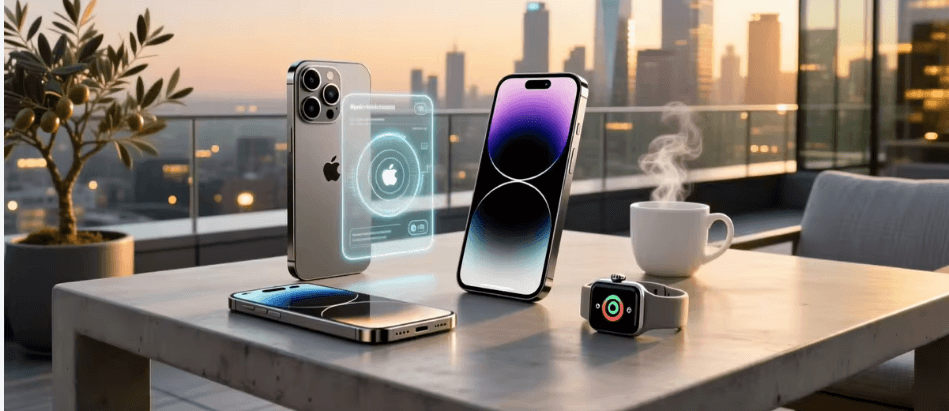

The smartphone industry is undergoing one of its most pivotal shifts since the transition from plastic capacitive screens to edge-to-edge glass assemblies. For years, mobile design prioritized incremental improvements within a monolithic, slab-style chassis. However, the concurrent engineering of high-performance rigid flagship architectures and flexible mechanical structures marks a divergence in hardware priorities.
The technical strategies defining two distinct architectural paths—the high-efficiency performance flagship represented by the Apple iPhone 18 Pro Max and the emerging structural paradigm of the foldable iPhone—highlight how engineering tradeoffs shape modern mobile computing.
1. Structural Integrity and Enclosure Physics
Designing a mobile enclosure requires balancing spatial density, thermal dissipation, drop protection, and torsional rigidity.
The Monolithic Slab (iPhone 18 Pro Max)
A traditional rigid flagship utilizes a unified structural frame, typically forged from Grade 5 titanium alloys or high-grade aerospace aluminum. The primary goal of this architecture is complete environmental sealing and rigid structural stability.
- Torsional Strength: By utilizing an integrated unibody chassis coupled with reinforced front glass panels, internal components are protected from flexing forces.
- Ingress Protection: The lack of moving exterior joints allows monolithic structures to achieve IP68 dust- and water-resistance standards with ease, supporting continuous immersion up to six meters.
- Internal Volume: A unified cavity permits dense internal stacking, allowing high-capacity lithium-ion batteries and intricate periscope telephoto optics to sit directly adjacent to the mainboard without requiring structural cutouts.
The Flexible Articulated Frame (Foldable iPhone)
A folding mechanism fundamentally changes enclosure mechanics. Instead of a single rigid cavity, the device must rely on a multi-part chassis connected by an engineered hinge mechanism.
- Hinge Dynamics and Fluid Mechanics: The central engineering challenge of the foldable iPhone is the hinge assembly. Utilizing complex gear trains, liquid metal components, or friction-based fluid mechanics, the joint must maintain consistent tension across hundreds of thousands of fold cycles while keeping the flexible display substrate flat when fully opened.
- Stress Distribution: Unfolding creates localized fatigue points along the display bending radius. Engineers must incorporate stress-relieving geometry and ultra-thin glass (UTG) layers combined with protective polymer films to prevent micro-fracturing over time.
- Sealing Mechanics: Preventing dust and particulate matter from entering the hinge assembly requires specialized micro-bristles and elastic hydrophobic membranes, making high-level ingress resistance significantly harder to achieve than on a rigid enclosure.
2. Thermal Management and Circuit Integration
Thermal management directly limits sustained processing performance. As system-on-chip (SoC) platforms operate at higher clock speeds and handle complex real-time artificial intelligence workflows, dispersing heat efficiently becomes critical.
| Feature / Dimension | iPhone 18 Pro Max (Rigid Architecture) | Foldable iPhone (Flexible Architecture) |
| Primary Form Factor | Monolithic bar enclosure | Dual-wing hinged assembly |
| Thermal Dissipation Surface | Uniform single-plane vapor chamber | Split-chassis heat distribution via flexible graphite |
| Display Technology | Rigid OLED with anti-reflective glass | Flexible OLED with Ultra-Thin Glass (UTG) |
| Internal Structural Volume | High (unbroken internal cavity) | Constrained (divided by central mechanical hinge) |
| Component Layout | Centrally stacked logic board & single battery | Distributed logic boards & split dual-battery layout |
Thermal Packaging in the iPhone 18 Pro Max
The iPhone 18 Pro Max benefits from a continuous thermal pathway. Heat generated by advanced system-on-chip architectures—built on ultra-dense 2nm manufacturing processes—can be distributed evenly across a large, unbroken rear surface area using expansive vapor chambers, thermal paste interfaces, and direct-to-chassis graphite sheet couplings. This unified heat sink configuration ensures high sustained processing speeds during intensive workloads like local generative AI processing, 4K spatial video recording, and high-framerate rendering.
Thermal Distribution in the Foldable iPhone
In a foldable device, the central hinge physically separates the internal volume into two isolated halves.
- Split Logic Assemblies: Power management circuits, storage controllers, and processing cores are often split across both sides of the phone.
- Thermal Bridging: Transferring heat from the primary SoC wing to the secondary display wing requires flexible graphite sheets that pass through the hinge mechanism. These sheets must endure continuous flexing without losing structural continuity or thermal conductivity.
- Throttling Thresholds: Because each wing of a foldable device is thinner than a typical rigid phone, the local thermal capacity is reduced, forcing thermal throttling algorithms to kick in earlier to prevent surface hot spots.
3. Display Substrates, Camera Optics, and Spatial Constraints
Display Substrates
The iPhone 18 Pro Max features a rigid OLED panel capped with tough ceramic glass, optimizing optical clarity, scratch resistance, and brightness efficiency. The rigid substrate supports advanced anti-reflective coatings and higher continuous peak nit levels without risking heat damage to the underlying emitter layers.
In contrast, the foldable iPhone must utilize a flexible OLED panel topped with Ultra-Thin Glass (UTG). UTG is engineered to fold thousands of times at tight radii, but it is physically thinner and softer than standard protective glass. Engineers must balance crease minimization against optical distortion, ensuring the display remains smooth when unfolded while surviving repeated mechanical flexing.
Camera Optics and the Z-Height Constraint
Camera systems are strictly governed by the laws of physics: optical focal length requires physical depth (Z-height).
- The High-Z Capability: The thicker profile of the iPhone 18 Pro Max provides ample Z-height. This accommodates large main camera sensors with mechanical variable apertures, as well as complex folded periscope zoom lenses that redirect light through internal prisms.
- The Low-Z Constraint: When folded, a dual-screen device must remain comfortable to hold; when unfolded, each half is drastically thinner than a standard smartphone. This thin profile restricts the available Z-height for camera modules, forcing engineers to choose between thinner optical sensors, external camera bumps, or under-display front camera arrays that compromise light capture in exchange for an uninterrupted screen layout.
See also: Tech Waste Recycling: A Comprehensive Guide to Sustainable IT Disposal
4. Power Delivery and Battery Architecture
Providing steady power requires different strategies for each device layout.
- Single-Cell Power Density: The iPhone 18 Pro Max utilizes a large, single-cell battery configuration. A single contiguous cavity maximizes volumetric energy density, enabling long battery life without requiring complex dual-board power distribution circuits.
- Dual-Cell Balancing: The foldable iPhone relies on a split dual-battery system distributed across both halves of the chassis to balance weight. Custom power management ICs must continuously balance charge and discharge rates between the two battery cells to prevent thermal imbalances, voltage drops, or premature battery degradation.
Technical Synthesis
Both form factors represent distinct branches of modern mobile engineering. The iPhone 18 Pro Max maximizes raw processing throughput, sustained thermal performance, optical capability, and overall structural durability within a refined, rigid design. Meanwhile, the foldable iPhone redefines multi-tasking utility, flexible display manufacturing, and miniaturized mechanical engineering—pushing the boundaries of what portable hardware can accomplish. As material science and chip manufacturing continue to evolve, the lessons learned from both engineering paths will shape the future of mobile technology.