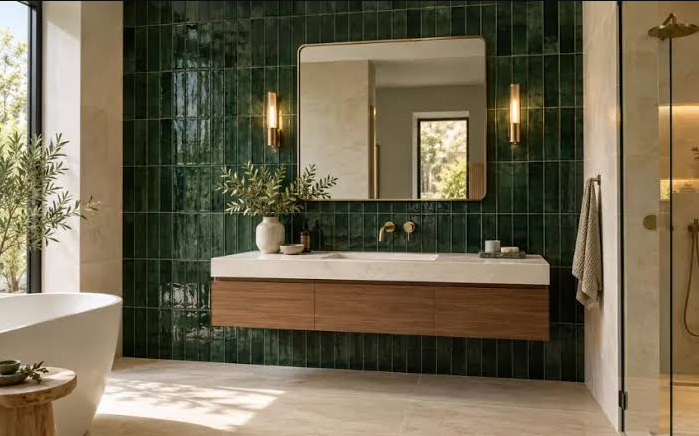

Exposed concrete floors, metal-framed windows, and utilitarian fixtures make industrial bathrooms striking but stark. Designers and homeowners facing these spaces often look for a way to soften the atmosphere without losing the urban edge. Choosing between matte vs glossy Green Accent Tile for feature walls, shower niches, or backsplashes becomes a pivotal decision. Each finish offers distinct visual and practical benefits—one diffuses light and emphasizes texture, the other adds shine and amplifies color. The right choice depends on the specific demands and style priorities of an industrial bathroom remodel.
Both matte and glossy green tiles bring bold personality to a utilitarian backdrop. Yet, the finish you select will directly affect how the space feels, how it functions, and how long it looks its best. Understanding the unique strengths and limitations of each green tile finish is the key to achieving a resilient and visually compelling industrial bathroom.
Defining Industrial Bathroom Aesthetics With Green Tile
Industrial bathrooms are defined by their use of raw materials—think weathered steel, concrete, and exposed brick. In these environments, the addition of green tile is more than mere decoration; it acts as a counterbalance to the cool, neutral palette. For example, a feature wall behind a trough sink clad in Green Accent Tile immediately draws the eye and injects color without overwhelming the space. This type of tile installation becomes a design anchor, uniting industrial elements with a natural hue.
The finish of the tile—matte or glossy—amplifies this effect in different ways. Matte tiles merge with the tactile qualities of rough concrete and aged wood, while glossy tiles introduce an unexpected sheen that contrasts with matte metals and brick. Both options let designers highlight or downplay certain architectural details based on the industrial setting.
Choosing the right green tile finish shapes the room’s mood. Matte surfaces produce a calm, understated look, ideal for industrial spaces that lean toward minimalism. In contrast, glossy green tiles add vibrancy and movement, perfect for bathrooms where a pop of energy is desired. Considering the role of accent color in industrial design is important when making this selection.
Characteristics Of Matte Green Finishes In Raw Spaces
Matte green tiles have a non-reflective surface that absorbs light rather than bouncing it around the room. This makes them a natural fit for industrial bathrooms with large windows or statement lighting fixtures, where glare can become an issue. For example, a matte green subway tile backsplash behind a concrete vanity will muffle harsh reflections and highlight the tile’s subtle texture.
This finish excels at hiding water spots, soap residue, and fingerprints—an advantage in high-traffic or shared bathroom settings. The muted surface complements industrial bathrooms that prioritize an unfussy, low-maintenance aesthetic. The tactile quality of matte tiles also means they pair well with other textured materials, such as hammered metal or reclaimed wood shelving.
One consideration when selecting a matte green finish is that it can mute the vibrancy of the color itself. While this might be ideal for a restrained, earthy industrial look, those seeking a more dramatic statement may prefer a glossier option. Understanding surface finishes and their practical effects can help guide this decision.
Reflective Qualities Of Glossy Green Tiles For Urban Lofts
Glossy green tiles feature a glass-like surface that reflects both artificial and natural light. In industrial bathrooms with limited daylight or smaller windows, this reflective quality can open up the space, making it feel brighter and more expansive. For instance, installing a glossy green accent strip in a shower enclosure instantly draws attention and creates a dynamic interplay of shadows and highlights on adjacent walls.
This finish intensifies the green pigment, making it appear deeper and more saturated. Urban lofts and converted warehouses often use this effect to create a focal point that contrasts with matte finishes in concrete or steel. Glossy green tiles work especially well in areas where visual impact is a priority, such as statement backsplashes or vertical shower bands.
However, glossy finishes come with their own set of challenges. The reflective surface will show water spots, streaks, and fingerprints more readily than matte options. Homeowners should weigh this against the desired aesthetic, especially if a high-shine look is central to their industrial bathroom vision.
Comparing Maintenance And Durability For Industrial Interiors
Maintenance and durability are key concerns in industrial bathrooms that see heavy use. Matte vs glossy Green Accent Tile each have specific cleaning and wear characteristics. Matte finishes resist the appearance of smudges and grime, so they require less frequent cleaning to look presentable. Their slightly textured surface can, however, trap dust or soap if not regularly wiped down with a damp cloth.
Glossy green tiles are easier to wipe clean thanks to their smooth, sealed surface. However, they show streaks and water marks more easily, so they may demand more frequent attention to maintain a spotless look. Over time, glossy tiles can also develop fine scratches, which are less visible on matte finishes.
Both finishes are durable when installed with proper grout and waterproofing, but the choice of finish should match the cleaning habits and usage patterns of the bathroom. For industrial bathrooms in shared or commercial settings, the ease of ongoing care can be as important as the initial aesthetic impact. Comparing tile maintenance requirements for each finish helps clarify the best fit for a given space.
Conclusion
Choose matte green tile for industrial bathrooms where subtlety, texture, and low-maintenance surfaces are priorities. Opt for glossy green tile to amplify light and color, especially in spaces that benefit from a dramatic visual statement. Evaluate the lighting conditions, cleaning routine, and desired mood before making your final decision—each finish brings a distinct character and set of advantages to the industrial setting.