
Packaging has evolved into a critical part of modern manufacturing rather than just a finishing step. Today, the way a product looks on the shelf often influences customer perception as much as the product itself. Brands are no longer competing only on quality but also on presentation, consistency, and speed to market. This has created a strong demand for automation in packaging processes.
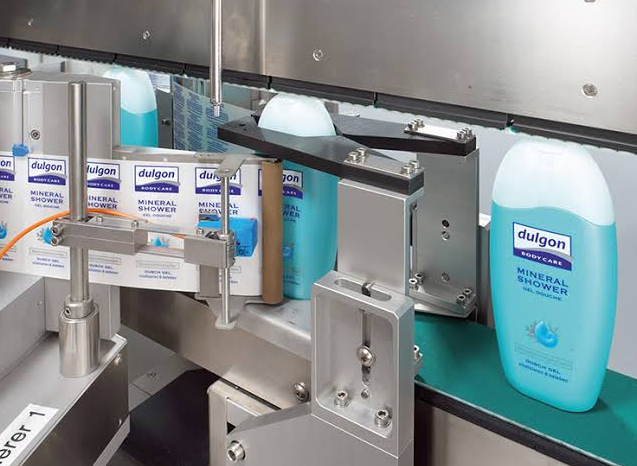
One of the most important innovations supporting this transformation is the bottle labeling machine, a precision-based system designed to apply labels on bottles with accuracy, consistency, and high-speed performance. It removes the limitations of manual labeling and ensures that every product leaving the production line maintains a uniform and professional appearance.
The role of the bottle labeling machine is not limited to sticking labels. It directly affects branding quality, production efficiency, compliance accuracy, and overall operational stability in industries that rely heavily on packaging.
The Shift From Manual Labeling to Automation
In traditional manufacturing environments, labeling was done manually. Workers would apply labels one by one, which often resulted in uneven placement, air bubbles, tilted labels, and inconsistent output. As production demands increased, manual methods became inefficient and unreliable.
This limitation pushed industries to adopt automated labeling systems that could handle large volumes with better precision. Over time, machines were developed that could automatically position, apply, and press labels onto bottles without human intervention.
Modern labeling systems are now capable of handling thousands of units per hour, making them essential in large-scale production environments where speed and accuracy are equally important.
See also: 7 Home Cold Plunges Compared Side by Side
Core Functionality of Bottle Labeling Systems
A bottle labeling machine is engineered to apply labels onto different types of bottles using controlled mechanical movement and sensor-based alignment. The system ensures that each label is positioned accurately according to predefined settings.
These machines can handle various bottle shapes, including round, square, and irregular designs, depending on the configuration. They also support different labeling materials such as paper labels, transparent films, and adhesive-based stickers.
The main objective of a bottle labeling machine is to ensure uniform application across all products, eliminating human inconsistency and improving packaging quality.
Why Industries Rely on Labeling Automation
Industrial production environments require speed, precision, and reliability. Manual labeling cannot meet these demands consistently, especially when production volumes are high.
Automated systems solve this issue by delivering stable performance throughout long production cycles. They ensure that every bottle receives identical labeling without variation, regardless of batch size.
Another major advantage is production speed. Automated machines can operate continuously, significantly increasing output while reducing delays in the packaging line.
Applications Across Different Industrial Sectors
Bottle labeling machines are used across a wide range of industries due to their adaptability and efficiency.
In beverage manufacturing, they are used to label water bottles, soft drinks, juices, and alcoholic beverages with consistent branding. In the pharmaceutical industry, labeling accuracy is critical for dosage information, safety instructions, and regulatory compliance.
Cosmetic companies rely on these machines to maintain premium product presentation, where visual appeal plays a key role in customer purchasing decisions.
Chemical and industrial sectors also depend on labeling systems to ensure that safety information and product details are clearly displayed on containers.
This wide application range highlights the importance of automated labeling in modern manufacturing.
Improving Efficiency in Production Lines
One of the biggest advantages of automation is improved workflow efficiency. A bottle labeling machine integrates seamlessly into production lines, ensuring that labeling does not become a bottleneck in the manufacturing process.
It synchronizes with filling, capping, and packaging systems to maintain a smooth and continuous workflow. This reduces downtime and improves overall production output.
Over time, this leads to better resource utilization and more stable manufacturing operations.
Enhancing Brand Identity and Market Presentation
Packaging is one of the first things customers notice about a product. A poorly labeled bottle can negatively impact brand perception, even if the product quality is high.
Automated labeling ensures consistent alignment, clean application, and professional presentation for every product. This consistency helps businesses build strong brand identity and customer trust in competitive markets.
A reliable bottle labeling machine plays a direct role in maintaining visual consistency across large product batches.
Reducing Waste and Operational Errors
Manual labeling often leads to wasted materials due to misalignment, incorrect placement, or damaged labels. These errors not only increase production costs but also reduce efficiency.
Automated systems significantly reduce such waste by ensuring precise label placement every time. This improves material utilization and lowers operational costs.
In addition, automation reduces dependency on manual labor, allowing employees to focus on quality control and machine supervision instead of repetitive tasks.
Flexibility in Modern Labeling Systems
Modern labeling machines are designed with flexibility in mind. They can be adjusted to accommodate different bottle sizes, shapes, and label formats without major downtime.
Advanced systems include sensors and control units that automatically detect bottle positioning and adjust label application accordingly.
This adaptability makes them suitable for industries with diverse product lines and frequent packaging changes.
Future of Bottle Labeling Automation
The future of labeling technology is moving toward smarter, more adaptive systems. With advancements in artificial intelligence, machine vision, and automated calibration, future machines will be able to detect bottle variations and adjust labeling parameters in real time.
This will further reduce errors, improve efficiency, and enhance production flexibility.
As manufacturing continues to evolve, systems like the bottle labeling machine will become even more intelligent and essential in global production environments.
Conclusion
The bottle labeling machine has become a key component in modern industrial packaging systems. It improves accuracy, increases production speed, reduces waste, and ensures consistent branding across all products.
By replacing manual labeling with automated precision systems, industries are able to achieve higher efficiency and better product presentation.
As automation technology continues to advance, labeling systems will play an even greater role in shaping the future of manufacturing and packaging industries worldwide.