
Cooling systems play an important role in maintaining comfortable and productive indoor environments across industrial, commercial, and institutional facilities. Among the various technologies used in evaporative cooling systems, cooling pads are one of the most critical components. These specialized media pads help maximize the cooling process by increasing the contact area between air and water. As a result, they improve cooling performance while supporting better airflow and indoor air quality.
Modern cooling pads for air cooler systems are designed to provide efficient cooling with lower energy consumption. Their ability to deliver consistent performance makes them a preferred choice in applications where energy efficiency and operational reliability are priorities. Understanding how cooling pads work, how to select the right material, and how to maintain them properly can help organizations achieve better cooling results and longer equipment life.
Learn more about advanced cooling pads for air cooler applications designed for efficient evaporative cooling performance.
What Are Cooling Pads for Air Coolers?
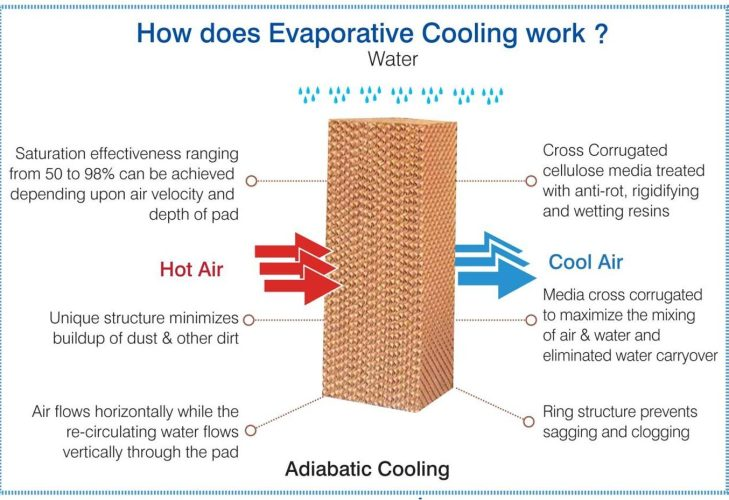
Cooling pads are specially designed evaporative media used in air coolers and evaporative cooling systems. Their primary function is to facilitate the evaporation process by providing a large surface area where water and airflow interact. As warm air passes through the wet cooling pad, heat is absorbed and water evaporates, resulting in cooler air entering the conditioned space.
The effectiveness of an evaporative cooling system depends heavily on the quality and design of the cooling pad. A well-designed cooling pad ensures uniform water distribution, efficient airflow, and optimal evaporation performance. These factors contribute directly to cooling efficiency and overall system effectiveness.
Key functions of cooling pads include:
- Supporting the evaporative cooling process
- Increasing heat transfer efficiency
- Enhancing airflow distribution
- Improving indoor comfort levels
- Reducing cooling energy consumption
How Do Cooling Pads for Air Coolers Work?
The cooling process begins when water is distributed evenly across the surface of the cooling pad. The pad absorbs and retains moisture while maintaining sufficient airflow pathways. As warm air passes through the wet media, heat energy is transferred to the water, causing evaporation.
This evaporation process naturally lowers the temperature of the air. The cooled air is then circulated throughout the facility, creating a more comfortable indoor environment. Because evaporative cooling relies on a natural process rather than refrigeration, it can deliver significant energy savings while maintaining effective temperature control.
The cooling cycle generally includes:
- Water distribution across the pad surface
- Moisture retention within the media
- Air movement through the cooling pad
- Evaporation and heat absorption
- Delivery of cooled air into the space
This simple yet effective process makes cooling pads a valuable component in energy-efficient cooling systems.
How Cooling Pads Improve Cooling Efficiency
Cooling efficiency depends on the ability of the evaporative system to maximize contact between air and water. Cooling pads are specifically engineered to enhance this interaction by increasing the available evaporation surface area. This allows the system to achieve greater temperature reduction while maintaining efficient airflow.
Modern cooling pads are designed to balance airflow resistance with water retention. This combination helps optimize evaporative performance without placing excessive strain on fans or air handling equipment. As a result, facilities can achieve effective cooling with lower energy consumption.
Major efficiency benefits include:
- Increased evaporation surface area
- Enhanced cooling effectiveness
- Improved airflow performance
- Lower energy requirements
- Consistent temperature control
The selection of high-quality cooling media can significantly influence overall system performance and operational efficiency.
How Cooling Pads Contribute to Better Air Quality
In addition to improving cooling performance, cooling pads also contribute to better indoor air quality. As air passes through the wetted media, some airborne particles may be captured before the air enters the occupied space. This helps support cleaner airflow while improving indoor comfort.
Cooling pads also promote the continuous introduction of fresh outdoor air. Unlike some recirculating cooling systems, evaporative cooling technologies often rely on fresh air ventilation. This helps reduce stale air accumulation and improves overall indoor environmental quality.
Benefits related to air quality include:
- Improved fresh air circulation
- Better airflow distribution
- Reduced indoor heat buildup
- Enhanced indoor comfort
- Cleaner air movement throughout the facility
Many facilities combine evaporative cooling technologies with solutions such as a heat recovery exchanger to further improve energy efficiency and indoor air management.
Types of Cooling Pads Used in Air Coolers
Several types of cooling pad materials are available, each offering unique performance characteristics. The selection of the appropriate cooling media depends on cooling requirements, operating conditions, maintenance expectations, and desired lifespan.
Common cooling pad options include:
- Cellulose cooling pads
- Synthetic cooling pads
- Rigid media cooling pads
- High-efficiency evaporative media
- Specialized industrial cooling pads
Each type is designed to balance airflow, water retention, and durability. Understanding these characteristics helps buyers select the most suitable solution for their specific application.
Why Cellulose Cooling Pads Are Widely Preferred
Cellulose cooling pads are among the most widely used evaporative cooling media due to their excellent water absorption and retention capabilities. Their structured design allows for efficient airflow while maintaining a consistently wet surface for effective evaporation.
The material’s ability to hold water evenly contributes to stable cooling performance across a wide range of operating conditions. In addition, cellulose pads are known for their durability and long service life when properly maintained.
Advantages of cellulose cooling pads include:
- Excellent water retention
- High cooling efficiency
- Uniform airflow distribution
- Long operational lifespan
- Reliable performance
These benefits make cellulose media a popular choice in commercial and industrial evaporative cooling applications.
How to Choose the Best Cooling Pads for Air Coolers
Selecting the right cooling pads requires evaluating several important factors. Cooling performance is influenced not only by the media material but also by pad thickness, airflow characteristics, and operating conditions.
Facilities should consider their cooling objectives, environmental conditions, and maintenance capabilities when making a selection. Choosing the appropriate cooling media helps maximize efficiency while minimizing long-term operating costs.
Key selection criteria include:
- Cooling capacity requirements
- Airflow volume
- Media thickness
- Material quality
- Durability expectations
- Maintenance needs
Careful evaluation of these factors helps ensure optimal system performance and long-term reliability.
Cooling Pad Maintenance Best Practices
Regular maintenance is essential for preserving cooling efficiency and extending cooling pad lifespan. Over time, mineral deposits, dust accumulation, and water quality issues can affect performance if not properly managed.
Routine inspections help identify potential issues before they impact system operation. Cleaning procedures should be performed according to manufacturer recommendations to maintain airflow and water distribution effectiveness.
Recommended maintenance practices include:
- Cleaning pads regularly
- Monitoring water quality
- Inspecting for wear or damage
- Checking water distribution systems
- Removing scale buildup when necessary
Proper maintenance helps sustain cooling efficiency while reducing the likelihood of premature media replacement.
How Long Do Cooling Pads Last?
Cooling pad lifespan varies depending on several factors, including operating conditions, maintenance practices, and water quality. High mineral content in water can accelerate scale buildup, while poor maintenance may shorten media life.
When properly maintained, high-quality cooling pads can provide reliable performance for extended periods. Regular inspections help identify signs of deterioration before performance is significantly affected.
Factors influencing lifespan include:
- Water quality
- Operating hours
- Environmental conditions
- Maintenance frequency
- Cooling media quality
Monitoring these factors helps maximize the service life of cooling pads and maintain consistent system performance.
Facilities seeking comprehensive HVAC efficiency improvements often integrate cooling technologies with advanced core energy recovery solutions to optimize ventilation and energy performance.
When Should Cooling Pads Be Replaced?
Cooling pads should be replaced when they no longer provide effective airflow or cooling performance. Over time, physical wear, mineral buildup, and structural deterioration can reduce their effectiveness.
Visible damage, restricted airflow, and declining cooling performance are common indicators that replacement may be necessary. Replacing worn cooling pads at the appropriate time helps maintain efficient operation and prevents unnecessary energy consumption.
Common signs of replacement needs include:
- Reduced cooling effectiveness
- Restricted airflow
- Physical deterioration
- Excessive mineral deposits
- Increased maintenance requirements
Proactive replacement helps ensure continued cooling efficiency and operational reliability.
Conclusion
Cooling pads are a fundamental component of evaporative cooling systems and play a significant role in improving both cooling efficiency and indoor air quality. By maximizing the interaction between air and water, they enable effective temperature reduction while supporting energy-efficient operation. Their contribution to airflow management and fresh air circulation further enhances overall environmental comfort.
Selecting the right cooling media, implementing proper maintenance practices, and replacing pads when necessary can significantly improve system performance and longevity. Whether used in industrial facilities, warehouses, or commercial buildings, high-quality cooling pads provide a practical and efficient solution for modern cooling requirements.
For expert guidance on evaporative cooling technologies and customized cooling solutions, contact Desiccant Rotors International.
Frequently Asked Questions
1. What are cooling pads for air coolers?
Cooling pads are evaporative media that facilitate heat transfer and water evaporation to lower air temperature in cooling systems.
2. How do cooling pads improve cooling efficiency?
They increase the surface area available for evaporation, allowing greater heat absorption and more effective cooling performance.
3. What are cellulose cooling pads?
Cellulose cooling pads are specially engineered evaporative media made from treated cellulose material that provides excellent water retention and cooling efficiency.
4. How long do cooling pads typically last?
The lifespan depends on water quality, maintenance practices, operating conditions, and media quality. Proper maintenance helps extend service life.
5. When should cooling pads be replaced?
Cooling pads should be replaced when cooling performance declines, airflow becomes restricted, or visible deterioration affects system operation.