
Once your organisation handles patient records, financial account data, or client files under privilege, the decision about retired storage stops being a procurement question. Choosing between on-site and off-site ssd destruction services is a risk allocation decision, and the two models move the risk to genuinely different places. Both end with the same certificate. What differs is what you’re accepting along the way.
Transit is where the incidents happen
Ask anyone who has managed a data-loss investigation involving retired hardware and the story is rarely dramatic. Drives were palletised for pickup. The count at the receiving facility didn’t match the count at the loading dock. Nobody can establish whether the gap opened in your building, in the truck, or at intake.
Custody gaps in transit account for a disproportionate share of these incidents relative to how little of the process transit represents. A drive in a locked cage on your premises is under your controls. A drive on a highway is under someone else’s, and the handoff points are where documentation thins out.
That single observation drives most of the on-site versus off-site decision.
What on-site destruction buys you
A mobile shredding unit arrives at your facility, your staff stage the drives, and destruction happens before anything data-bearing leaves your property in a readable state.
Your compliance officer can stand there and watch. What leaves afterwards is shredded particulate with no recoverable information on it, which means the transport leg carries no data risk at all.
For regulated environments this closes the argument cleanly. There is no window during which drives existed intact outside your control, so there is no window to explain to a regulator.
The trade-offs are practical. You need dock or yard access for the unit, someone has to schedule around it, and per-drive cost runs higher than batch processing at a fixed facility.
What off-site destruction buys you
Drives are collected under documented custody and destroyed at a fixed facility with industrial equipment, tighter environmental controls on the resulting material, and better throughput economics.
Reputable providers let you observe. You can send a representative to watch destruction in person, or request live or recorded video of the event — which covers most verification needs without anyone travelling.
Off-site is the right answer for volume. A data centre decommission producing hundreds of drives processes faster and cheaper this way, and the facility’s material recovery is generally cleaner than what a mobile unit can achieve.
The cost is that transit leg. You’re relying on the provider’s chain-of-custody controls, so those controls are what you should be auditing.
The third option people forget
Some organisations operate under protocols that forbid sensitive material leaving the premises under any circumstances, and also can’t have external staff handling it.
Self-service rental covers that case. The provider delivers a mobile destruction unit, trains your cleared personnel on operation and logging, and your own staff perform the destruction. Custody never transfers at all.
It’s a niche answer, but for defence contractors, some healthcare settings, and legal environments handling privileged material, it’s occasionally the only answer that satisfies the internal policy as written.
See also: Tech Waste Recycling: A Comprehensive Guide to Sustainable IT Disposal
The SSD destruction services details most contracts miss
Whichever model you choose, flash memory adds requirements that hard-drive-era contracts often miss.
Confirm the equipment is rated for solid-state media, not just magnetic. Confirm the shred particle size and that it destroys the NAND packages themselves rather than separating them intact from the board.
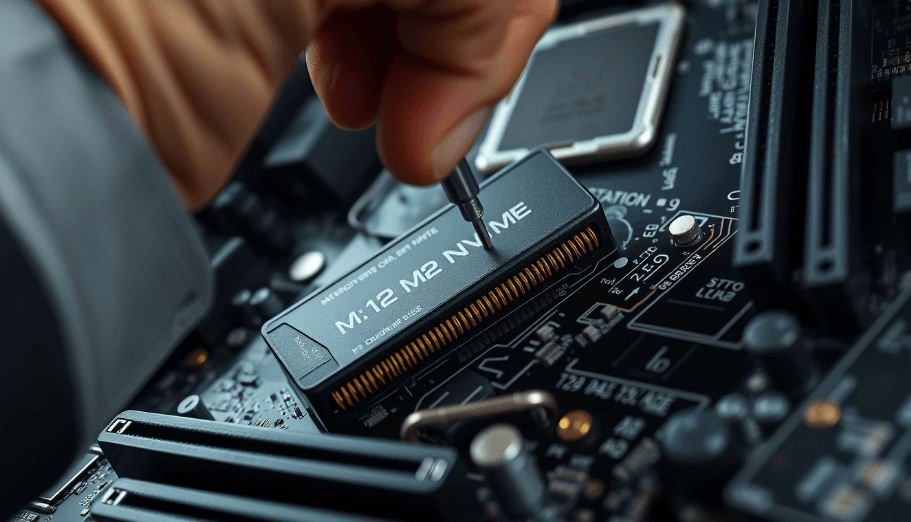
Get M.2 and U.2 form factors named explicitly in scope. Small-format drives get missed in intake counts more often than any other category, and a drive that never got counted never gets destroyed.
Include embedded storage in the conversation. Multifunction printers, network appliances, medical devices, and point-of-sale terminals all hold data on internal flash that no drive inventory captures.
The documentation test
Before signing anything, ask for a sample report pack from a comparable engagement.
You want a certificate of destruction with individual serial numbers, an intake inventory with make and model, date, location, technician identification, and — for off-site — a custody log covering every handoff.
If a provider can’t show you what your audit file will look like before you commit, that’s the finding. Well-run ssd destruction services treat documentation as the actual deliverable, because two years from now the paperwork is the only part of the engagement that still exists.