
Modern manufacturing has entered an era where precision, speed, and automation define industrial success. Factories are no longer judged only by production volume but by how accurately and efficiently they can deliver high-quality products. This shift has created a strong demand for advanced welding technologies that can meet strict engineering standards while supporting large-scale production.
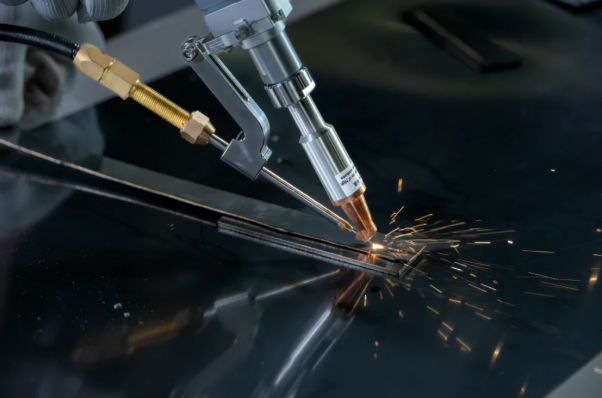
Among these technologies, laser welding has emerged as one of the most important innovations. It provides clean, strong, and highly accurate joints by using a concentrated beam of light instead of traditional heat-based contact methods. This allows manufacturers to achieve minimal distortion, higher control, and superior finishing quality across a wide range of materials.
At the center of this transformation is the role of a laser welding machine manufacturer, which is responsible for designing and delivering the systems that power modern production lines. These manufacturers are not just equipment providers but engineering partners who influence industrial performance at every level.
The Shift Toward Precision-Based Manufacturing
Traditional welding techniques such as MIG, TIG, and arc welding have supported industries for decades. However, as product designs become more complex and tolerances become tighter, these older methods often struggle to deliver the required level of consistency.
Laser welding solves many of these limitations by focusing energy into a precise beam that allows controlled material fusion. This reduces heat affected zones and improves structural integrity, especially in sensitive or high-value components.
As industries move toward precision-based production, laser welding systems are becoming essential tools for achieving modern manufacturing standards.
Why a Laser Welding Machine Manufacturer Matters More Than Ever
The performance of a laser welding system depends heavily on its design, engineering quality, and integration capabilities. This is where a laser welding machine manufacturer plays a critical role.
These manufacturers are responsible for developing the core system architecture, including laser sources, beam delivery systems, cooling mechanisms, motion control units, and safety components. Every part must work in perfect synchronization to ensure stable and accurate welding performance.
Unlike simple mechanical equipment providers, laser welding manufacturers must combine knowledge of optics, thermodynamics, material science, and automation engineering to build reliable systems.
Their expertise directly influences how well the machine performs in real-world industrial environments.
See also: Tech Waste Recycling: A Comprehensive Guide to Sustainable IT Disposal
Engineering Precision Behind Every Welding System
Laser welding machines are highly advanced systems that require careful engineering at every stage. The laser beam must remain stable, the energy output must be consistent, and the thermal control system must prevent overheating or material damage.
Even small variations in system performance can affect weld quality. This is why manufacturing precision is not optional but essential.
A well-designed system ensures that each weld is identical, even in high-speed production environments. This level of consistency is especially important in industries such as automotive manufacturing, aerospace engineering, electronics production, and medical device fabrication.
Automation and the Role of Smart Manufacturing
Modern production systems are becoming increasingly automated. Machines are now expected to operate with minimal human intervention while maintaining high levels of accuracy and efficiency.
Laser welding technology fits perfectly into this automated ecosystem. It can be integrated with robotic arms, CNC systems, and smart production lines to enable continuous, high-speed manufacturing.
A forward-thinking laser welding machine manufacturer designs equipment that supports this level of automation. This includes compatibility with digital control systems, real-time monitoring capabilities, and adaptive process control features.
As Industry 4.0 continues to expand, laser welding systems are becoming a key component of intelligent manufacturing environments.
Material Flexibility and Industrial Applications
One of the strongest advantages of laser welding technology is its ability to work with a wide range of materials. From stainless steel and aluminum to titanium and specialized alloys, laser systems provide flexible solutions for different industrial needs.
This flexibility makes them suitable for multiple industries, including automotive production, electronics assembly, battery manufacturing, energy systems, and precision engineering.
Each application requires specific welding parameters such as power intensity, penetration depth, and beam focus. Manufacturers must design systems that can adapt to these varying requirements without compromising performance.
Efficiency and Production Optimization
In addition to precision, laser welding systems also offer significant improvements in production efficiency. Traditional welding methods often require additional finishing processes due to spatter, distortion, or uneven welds.
Laser welding minimizes these issues, reducing the need for post-processing and improving overall production speed.
Energy efficiency is another important advantage. Laser systems concentrate energy exactly where it is needed, reducing waste and improving operational efficiency.
Over time, these benefits contribute to lower production costs and higher productivity levels.
Reliability in Industrial Environments
Manufacturing environments require equipment that can operate continuously under demanding conditions. Reliability is therefore one of the most important factors in welding system performance.
Laser welding machines are designed with advanced cooling systems, stable optical components, and robust mechanical structures to ensure consistent operation over long production cycles.
A reliable system reduces downtime, minimizes maintenance requirements, and supports uninterrupted production workflows.
This reliability is a key reason why industries are increasingly adopting laser welding technology.
The Future of Laser Welding Technology
The future of laser welding is closely connected to advancements in automation, artificial intelligence, and digital manufacturing systems.
Future machines are expected to include real-time quality monitoring, adaptive energy control, and predictive maintenance capabilities. These innovations will further improve precision while reducing human intervention.
A modern laser welding machine manufacturer is expected to focus not only on hardware but also on intelligent system integration and software-driven performance optimization.
As technology continues to evolve, laser welding will play an even greater role in shaping advanced manufacturing systems.
Conclusion
Laser welding technology has become a cornerstone of modern industrial manufacturing due to its precision, efficiency, and adaptability. It enables industries to achieve high-quality results that were not possible with traditional welding methods.
However, the true effectiveness of this technology depends on the expertise behind its design and production.
A laser welding machine manufacturer plays a vital role in developing systems that combine optical engineering, automation compatibility, and industrial reliability.
As manufacturing continues to evolve toward smarter and more efficient production systems, these manufacturers will remain central to industrial innovation and technological progress.