
Industrial production has changed into a highly synchronized system where every second, every movement, and every unit of output matters. Companies are no longer focused only on manufacturing products; they are equally concerned about how efficiently those products are packed, grouped, and prepared for distribution. This final stage of production often decides how smoothly supply chains function and how reliably products reach customers.
In this evolving environment, automation has become a core requirement rather than an optional improvement. Among the key innovations supporting this transformation is the case packer machine, a system designed to automatically organize products into cases or cartons with speed, accuracy, and consistency.
A case packer machine plays a crucial role in reducing manual dependency while improving packaging quality. It ensures that products are grouped correctly, placed safely, and prepared for shipment without delays or inconsistencies. This makes it an essential part of modern industrial packaging systems.
The Growing Need for Automated Packaging Systems
Traditional packaging methods relied heavily on manual labor. Workers would pick products, arrange them into boxes, seal them, and prepare them for transportation. While this approach worked in smaller operations, it becomes inefficient in high-volume production environments.
As industries expanded and demand increased, manual packaging started creating challenges such as slower processing speeds, inconsistent results, and higher operational costs. These limitations pushed manufacturers to adopt automated solutions that could handle repetitive tasks with higher efficiency.
The introduction of packaging automation, especially case packing systems, solved many of these challenges by offering stable and repeatable performance across large production cycles.
See also: Tech Waste Recycling: A Comprehensive Guide to Sustainable IT Disposal
What a Case Packer Machine Actually Does
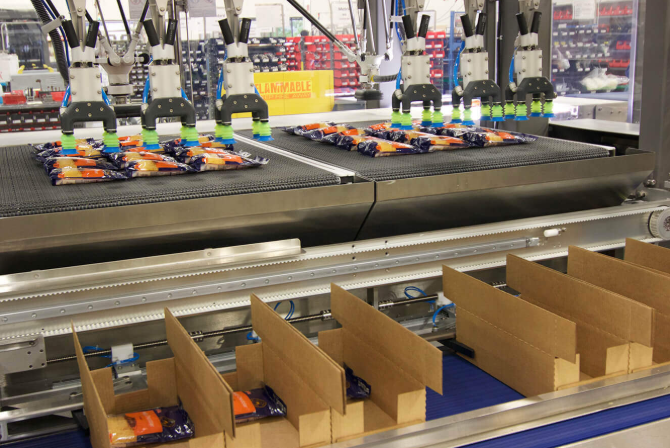
A case packing system is designed to take finished products from a production line and automatically arrange them into shipping cases or cartons. This process involves grouping items in specific patterns, aligning them correctly, and placing them into packaging boxes with precision.
A case packer machine performs these operations using mechanical, pneumatic, or robotic systems depending on its design. The main goal is to ensure that products are packed quickly and accurately without human intervention.
This level of automation significantly improves workflow efficiency and reduces the risk of packaging errors that can occur in manual systems.
Different Configurations of Case Packing Systems
Case packing technology is not limited to a single design. Different industries require different packaging methods based on product type, size, and fragility.
Some systems use robotic arms to pick and place items individually into boxes, while others use conveyor-based mechanisms that group products before loading them into cases. There are also hybrid systems that combine mechanical and robotic technologies to achieve higher flexibility.
This variety allows manufacturers to choose a system that best fits their production requirements and operational goals.
Efficiency Improvements in Industrial Operations
One of the most significant benefits of using a case packing system is the improvement in operational efficiency. Manual packaging processes often slow down production due to fatigue, inconsistency, and human limitations.
Automated systems eliminate these challenges by operating continuously at a stable speed. This ensures consistent output and reduces delays in the production line.
A case packer machine also helps streamline the entire packaging process by synchronizing with upstream machinery such as filling, labeling, and sealing systems. This creates a smooth and uninterrupted workflow from production to packaging.
Accuracy and Product Consistency
Accuracy is extremely important in packaging operations. Incorrect placement or inconsistent grouping can lead to damaged goods or inefficient shipping arrangements.
Automated case packing systems are designed to maintain high levels of precision in every cycle. They ensure that products are arranged in the correct orientation and quantity before being placed into cartons.
This consistency improves overall product quality and enhances customer satisfaction, especially in industries where presentation and protection are equally important.
Reduction of Manual Labor and Operational Costs
Labor-intensive packaging operations require a large workforce, which increases costs and introduces variability in performance. Human workers may also struggle to maintain consistent speed during long production shifts.
By implementing a case packer machine, manufacturers can significantly reduce dependency on manual labor. This allows businesses to optimize workforce allocation and reduce long-term operational expenses.
Over time, automation leads to better cost efficiency and improved productivity, making it a valuable investment for large-scale manufacturing operations.
Integration with Modern Production Lines
Modern manufacturing systems are highly interconnected. Machines are expected to communicate and operate together in a synchronized environment.
Case packing systems are designed to integrate seamlessly with other production equipment such as conveyors, filling machines, and warehouse systems. This ensures that products move smoothly from one stage to another without interruption.
This integration supports continuous production flow and enhances overall system efficiency.
Reliability in High-Volume Manufacturing
Industrial packaging systems must operate under continuous load without frequent breakdowns. Any disruption in packaging can affect the entire supply chain and delay product delivery.
A case packer machine is engineered for durability and long-term stability. Its components are designed to withstand continuous operation while maintaining consistent performance.
This reliability ensures that manufacturers can meet high production demands without compromising efficiency or quality.
Future of Case Packing Technology
The future of packaging automation is moving toward smarter and more adaptive systems. Advanced technologies are being developed to improve flexibility, reduce setup time, and enhance operational intelligence.
Future case packing systems may include AI-based recognition, automatic adjustment for different product types, and predictive maintenance features that reduce downtime.
These advancements will further increase efficiency and make packaging systems more intelligent and self-managed.
Conclusion
The case packer machine has become an essential part of modern industrial packaging systems. It has transformed how products are grouped, packed, and prepared for distribution by introducing automation, precision, and speed into the final stage of production.
By reducing manual labor, improving accuracy, and enhancing operational efficiency, this technology plays a vital role in supporting large-scale manufacturing operations.
As industries continue moving toward automation and smart production systems, case packing machines will remain a key component of efficient, reliable, and future-ready manufacturing environments.